
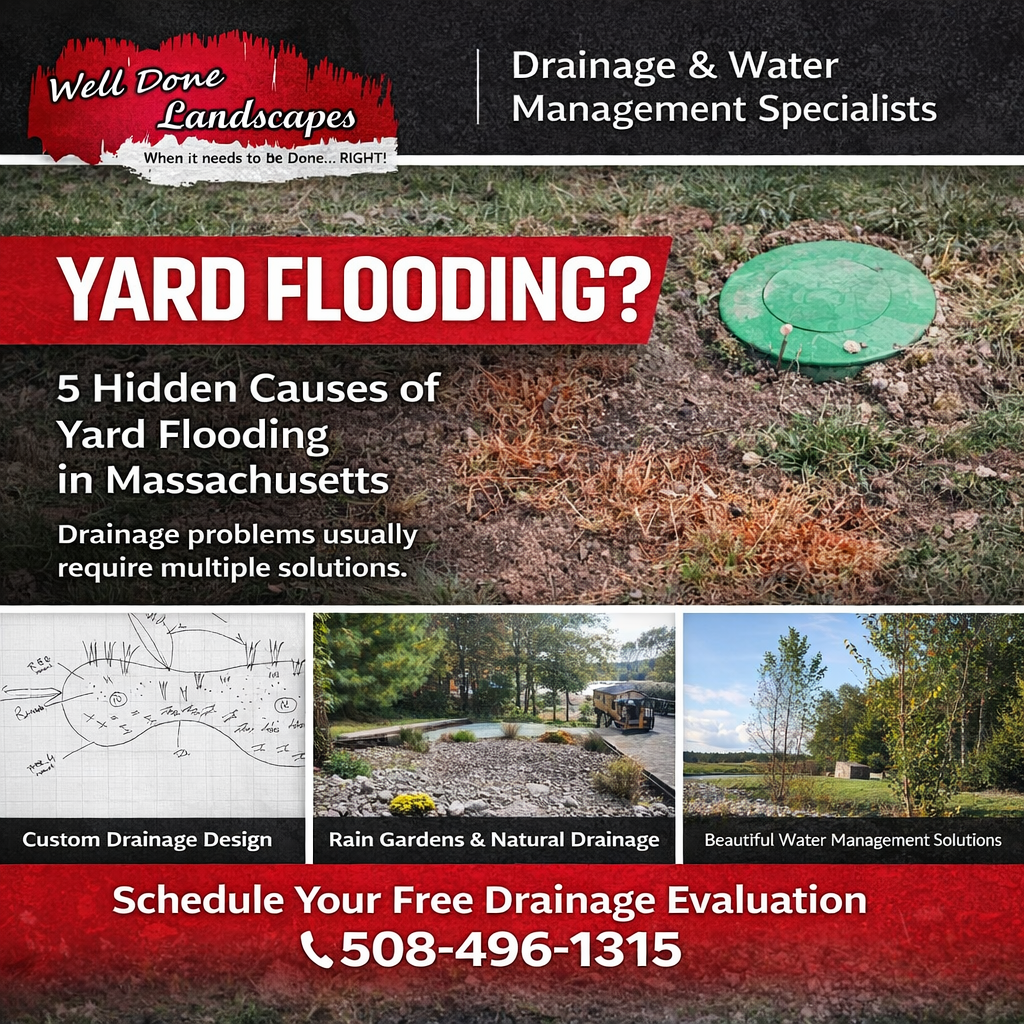
If your lawn stays soggy, puddles for days, or turns into a swamp every time it rains, you are not alone. Yard flooding is a common issue for Massachusetts homeowners, especially after heavy snowmelt, spring rains, coastal storms, and repeated freeze-thaw cycles.
The truth is, drainage issues are rarely caused by just one thing. In many cases, flooding happens because of a combination of grading, soil type, runoff patterns, and failing drainage systems.
Here are 5 of the most common causes of yard flooding in Massachusetts and what may be needed to fix them.
1. Poor Yard Grading
One of the most common reasons for standing water is improper grading. If your yard slopes toward your home, patio, walkway, or low spots in the lawn, water will naturally collect there instead of draining away.
Even a small grading issue can create major problems over time, especially during heavy rain or snowmelt.
Signs of poor grading include:
-
Water pooling near the foundation
-
Soggy lawn areas that stay wet for days
-
Mulch washing out of beds
-
Water collecting on walkways or patios
In many cases, drainage correction starts with reshaping the grade so water flows away from structures and vulnerable areas.
2. Heavy Clay Soil
Many properties in Massachusetts have dense, compacted, or clay-heavy soils that do not absorb water well. Instead of soaking into the ground, water sits on the surface and creates puddles, muddy turf, and soft unusable lawn areas.
This is especially common in:
-
Older established lawns
-
New construction properties
-
Areas with repeated equipment traffic
-
Low areas with poor air movement and compaction
When the soil cannot infiltrate water fast enough, flooding becomes a recurring issue. Sometimes the solution involves soil improvement, but many times additional drainage measures are needed.
3. Downspouts Discharging Too Close to the House
Your gutter system may be collecting roof water properly, but if your downspouts dump that water right next to the house, driveway, planting beds, or lawn, you may be creating a drainage problem every time it rains.
A roof sheds a tremendous amount of water. When that water is concentrated in one area, it can quickly overwhelm the soil and create:
-
Foundation moisture issues
-
Washed-out beds
-
Lawn erosion
-
Standing water near the home
Downspout extensions, underground drainage lines, or properly designed discharge areas are often necessary to move water where it belongs.
4. Low Spots and Natural Drainage Basins
Some yards have natural depressions where water wants to collect. These low areas may not seem like a big issue during dry weather, but after a storm they can become muddy, unusable, and damaging to turf and landscape beds.
In Massachusetts, these low areas often get worse due to:
-
Snow piles melting into one section of the yard
-
Settling over time
-
Repeated saturation from seasonal storms
-
Runoff from neighboring properties
A low area may need regrading, a drainage swale, a catch basin, a dry creek bed, or another integrated solution depending on how much water is entering the area.
5. Too Much Runoff From Roofs, Driveways, Slopes, or Neighboring Properties
Sometimes the problem is not just your yard — it is the amount of water flowing into it.
Runoff from roofs, paved surfaces, hillsides, and adjacent lots can push more water into your property than the ground can handle. This is why many drainage issues cannot be solved with a simple pipe or a single drain.
Effective drainage planning often requires evaluating:
-
Roof water volume
-
Hard surfaces like driveways and patios
-
Elevation changes
-
Water entering from neighboring lots
-
Existing drainage paths
-
Soil absorption rate
The right solution may involve multiple components working together, such as grading, drainage pipe, catch basins, swales, curtain drains, dry wells, or erosion control features.
Why Yard Flooding Should Not Be Ignored
Yard flooding is more than an inconvenience. Left unaddressed, it can lead to:
-
Lawn damage
-
Plant decline
-
Mosquito breeding areas
-
Erosion
-
Foundation concerns
-
Ice hazards in colder months
-
Damage to walkways, patios, and other landscape features
The longer water problems continue, the more expensive they often become to repair.
The Right Drainage Solution Starts With the Right Diagnosis
One of the biggest mistakes homeowners make is assuming drainage problems are always solved by “just installing a drain” or “adding some loam.” In reality, the correct fix depends on where the water is coming from, how it moves, how much water is involved, and where it can safely be redirected.
At Well Done Landscapes, we help Massachusetts homeowners identify the real cause of yard flooding and build practical drainage solutions designed for the property as a whole.
Need Help With Yard Flooding in Massachusetts?
If your yard is holding water, staying muddy, or showing signs of drainage failure, now is the time to address it before the problem gets worse.
Contact Well Done Landscapes for a no-cost drainage evaluation and let’s build a solution that works.
Well Done Landscapes
508-496-1315
welldonelandscapes.com